- By Steven
- October 16, 2025
- Comments (0)
In the world of private aviation, every detail matters — from the sleek exterior polish to the immaculate interior finish. Maintaining a spotless cabin isn’t just about luxury; it’s a reflection of safety, comfort, and care. That’s where the expertise of an aircraft cabin cleaner comes in.
These professionals are trained to uphold the highest hygiene and presentation standards, ensuring that every flight feels brand-new. Whether it’s removing fine dust particles or conditioning delicate leather, the process combines precision with industry-approved cleaning technology.
At Tri-point Aviation, our team specializes in interior detailing that exceeds aviation standards. To understand how each technique contributes to perfection, explore our Ultimate Guide to Aircraft Detailing — a complete resource for owners and operators who value both craftsmanship and compliance.
Why Cabin Cleaning Is Critical for Aircraft Safety and Value
Unlike cars or residential spaces, aircraft cabins require cleaning methods that balance aesthetics with regulatory and safety requirements. Dust buildup or residue inside an aircraft can interfere with sensitive avionics, while neglected fabrics or surfaces can harbor bacteria that affect air quality.
A professional aircraft cabin cleaner ensures each surface meets FAA and EASA cleanliness standards, preventing contamination risks while maintaining a pristine flight experience. This level of detail also preserves the long-term value of your aircraft — protecting luxury materials like leather, veneer, and glass from damage.
Tri-point Aviation combines cleanliness with operational precision through our Aircraft Maintenance and Aviation Detailing Services, ensuring every jet interior reflects its owner’s commitment to safety and excellence.
Step-by-Step Process Used by Professional Aircraft Cabin Cleaners
A true professional never skips a step. Every aircraft cabin cleaner follows a structured process designed for efficiency and compliance. Here’s how Tri-point Aviation delivers flawless interior cleaning:
a. Initial Inspection and Material Assessment
Before touching any surface, technicians evaluate interior materials — from leather upholstery to composite panels — ensuring all cleaning agents are aviation-approved and safe for each finish.
b. HEPA Vacuuming and Dust Removal
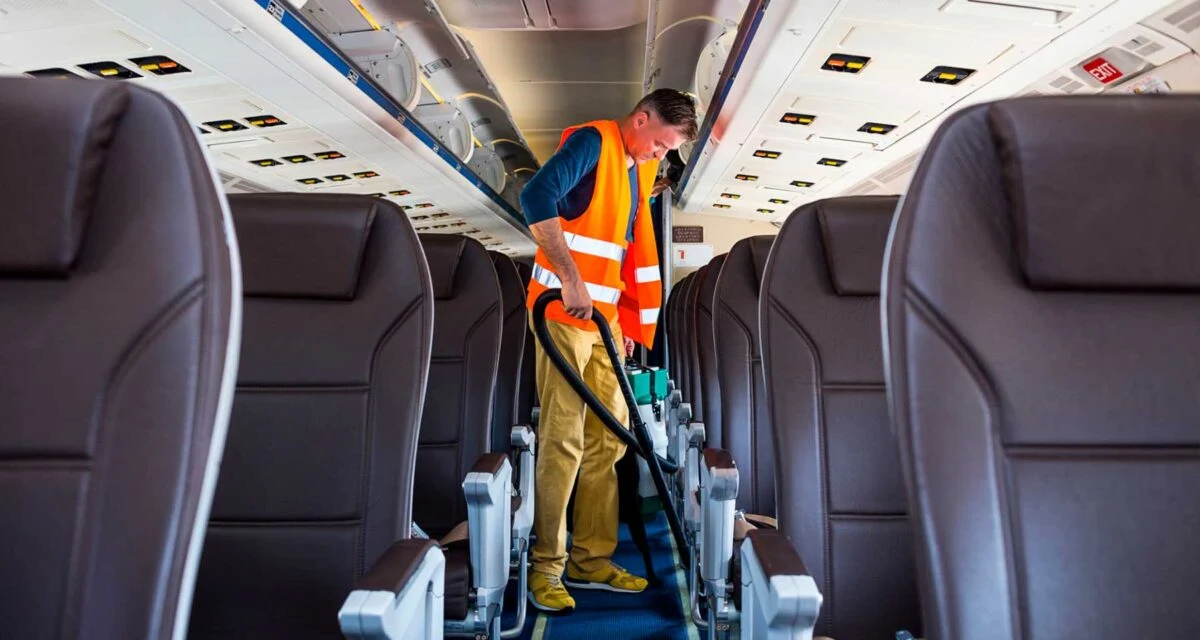
Using HEPA filtration vacuums, cleaners remove micro-dust particles from carpets, vents, and seat seams to enhance air quality and prevent recirculation of contaminants.
c. Surface Cleaning and Disinfection
All surfaces, including tray tables, sidewalls, and control panels, are wiped using non-corrosive, aviation-grade disinfectants that meet OEM standards.
d. Deep Sanitization and Odor Treatment
Professional cleaning often includes UV-C light sterilization and antimicrobial treatments to eliminate odor-causing bacteria without affecting materials.
e. Final Detailing and Quality Inspection
Before approval, every cleaned cabin undergoes a multi-point inspection to verify surface uniformity, cleanliness, and material integrity.
For an in-depth view of our craftsmanship in cabin care, visit Luxury Private Jet Interior Refurbishment — where luxury meets aviation precision.
Top Techniques Every Aircraft Cabin Cleaner Relies On
When it comes to maintaining immaculate jet interiors, every aircraft cabin cleaner uses specialized techniques that go beyond standard cleaning. These professional methods ensure each material and surface maintains its original finish, durability, and luster.
Non-Abrasive Microfiber Cleaning
Microfiber cloths reduce static buildup and prevent scratching of delicate materials such as polished metals or screens.
Anti-Static Treatments for Cockpit Areas
Flight decks contain sensitive instruments; using anti-static solutions helps prevent dust attraction and potential interference with controls.
Leather Conditioning
Proper conditioning restores flexibility, prevents cracking, and preserves the natural sheen of premium aircraft upholstery.
HEPA Vacuuming and Air Duct Cleaning
HEPA filtration systems are vital in removing allergens and ensuring purified air circulation throughout the cabin.
UV Sanitization and Odor Neutralization
Advanced UV-C disinfection eliminates bacteria, viruses, and lingering odors without the use of harsh chemicals — keeping the cabin environment safe for passengers.
For a detailed overview of recommended aviation-safe products, explore The Best Aircraft Cleaning Products for Interior and Exterior Maintenance.

Cleaning Techniques by Material Type
Aircraft interiors feature diverse materials — each demanding unique cleaning approaches. A knowledgeable aircraft cabin cleaner understands these nuances to protect every element of design and comfort.
Leather and Upholstery
Leather requires gentle, pH-balanced cleaners followed by hydration using conditioners to prevent dryness and cracks. Stain protection coatings can further extend material life.
Wood Veneers and Laminates
High-gloss finishes demand dry or minimal-moisture cleaning to prevent warping. Only aviation-approved polishers are used to maintain luster without buildup.
Metal and Glass
These reflective surfaces must remain streak-free. Professional cleaners use ammonia-free solutions for a brilliant, fingerprint-resistant finish.
Carpets and Fabrics
Using low-moisture extraction systems ensures deep cleaning without oversaturation — essential for maintaining airworthiness and preventing mildew.
Want to know what’s trending in aircraft interior design? Visit Top Trends in Aircraft Upholstery: Houston’s Guide to Premium Cabin Refurbishment for inspiration on upgrading your jet interior.
Tools and Equipment That Define Professional Cabin Cleaning
Precision cleaning in aviation requires the right tools. A professional aircraft cabin cleaner relies on equipment designed specifically for the sensitive environment of jet interiors.
Key tools include:
HEPA-filter vacuums for high-efficiency dust removal.
pH-neutral cleaning solutions that prevent corrosion or fading.
Fogging disinfectant systems to sanitize cabins quickly and evenly.
Microfiber and anti-static applicators to protect instrument panels and luxury finishes.
Every tool used by Tri-point Aviation is FAA-compliant, flame-resistant, and designed to prevent electrostatic discharge — ensuring safety while achieving a flawless finish.
For external maintenance professionals, our guide on Using Aircraft Paint Remover for Professional Results explains how precision tools make all the difference in aviation cleaning services.
Eco-Friendly Cleaning in Modern Aviation
Sustainability has become a defining trend in aviation, and cleaning practices are no exception. Today, leading aircraft cabin cleaners use eco-friendly, non-toxic products that meet both safety and environmental standards.
Traditional solvents are being replaced with biodegradable solutions that are gentle on leather, wood, and fabrics while reducing chemical emissions. Water-based cleaners also prevent residue buildup, extending the life of cabin materials.
At Tri-point Aviation, we combine precision with responsibility — offering sustainable aircraft detailing services that deliver a spotless finish while aligning with modern environmental expectations.
To see how sustainable cleaning integrates with comprehensive maintenance, explore Aircraft Paint Services in Houston: How Professional Painting Protects and Enhances Your Jet — a guide on performance and preservation.
How Often Should Aircraft Cabins Be Cleaned?
Determining how often to clean an aircraft cabin depends on flight frequency, passenger volume, and usage purpose. For private jets, interior cleaning should ideally occur after every few flights, while commercial or charter aircraft often require more frequent sanitation.
A professional aircraft cabin cleaner typically recommends:
Light cleaning (vacuuming, disinfecting, and wiping) after each flight
Deep detailing every 25–50 flight hours
Comprehensive interior refurbishment every 6–12 months
Regular upkeep doesn’t just maintain appearance — it also ensures compliance with aviation hygiene standards and boosts passenger comfort.
For long-term maintenance plans, our Aircraft Maintenance Services are tailored to include both technical inspections and luxury cleaning schedules that keep your aircraft at peak performance.
The Tri-Point Aviation Approach to Cabin Perfection
At Tri-point Aviation, we redefine what it means to deliver luxury aviation cleaning services. Every aircraft cabin cleaner in our team follows a philosophy rooted in precision, consistency, and care.
Our approach includes:
Bespoke Cleaning Plans: Tailored to each aircraft type, usage pattern, and interior material.
Certified Aviation Technicians: Professionals trained in aircraft-safe cleaning chemistry and FAA compliance.
Advanced Equipment: Including anti-static systems, HEPA vacuums, and odor-neutralizing technologies.
Post-Clean Inspection: Each job concludes with a detailed inspection and a quality assurance checklist.
Tri-point Aviation combines this cleaning expertise with Luxury Aviation Consulting, helping clients maintain their aircraft’s appearance and operational integrity in the most efficient, compliant way possible.
Choosing the Right Partner for Aircraft Cabin Cleaning
Selecting the right cleaning partner isn’t about finding the lowest quote — it’s about ensuring your aircraft receives the care and precision it deserves.
When choosing an aircraft cabin cleaner, look for:
Proven aviation detailing experience
Use of FAA-approved cleaning agents
A portfolio of luxury jet maintenance services
Positive client reviews and inspection compliance records
At Tri-point Aviation, we deliver full-service aviation care — from Aircraft Detailing and painting to maintenance and custom interiors. Whether you own a private jet or manage a fleet, our team ensures every flight reflects the highest standard of comfort, safety, and luxury.


